Start with the kitchen
The kitchen has the most surfaces, so it goes first. Begin at the top, with everything reached from the floor and nothing climbed. The hood gathers a film that lifts in short strokes with a damp wipe.
Empty the fridge and the freezer. Door shelves and vegetable drawers come out for a wipe and go back dry. At the sink, scrub around the rim and under the lip of the faucet, where mineral spots build. On the stovetop, break down the parts the manual lists and soak them while you work on the rest.
Counters need two passes: one for crumbs, one for the sticky ring under the toaster. Every drawer and every cabinet door comes open for a wipe on the front, the pull and the shelves inside. The oven is cleaned with its own cleaner and its own manual.
Bathrooms and the hard water film
A bathroom crams a lot of surfaces into a short wall: hard water film on the glass, soap scum on the tile, dark grout lines. The tub or shower goes first because it needs the longest to dry. Scrub where the grout has darkened. Lift the toilet seat, wipe the hinges and the bowl rim under the seat. The vanity, the mirror, the medicine cabinet inside, and the baseboards tucked behind the door finish last.
Never mix cleaning products. One product at a time, with the door open and the fan on.
Closets and floors, before the last walk
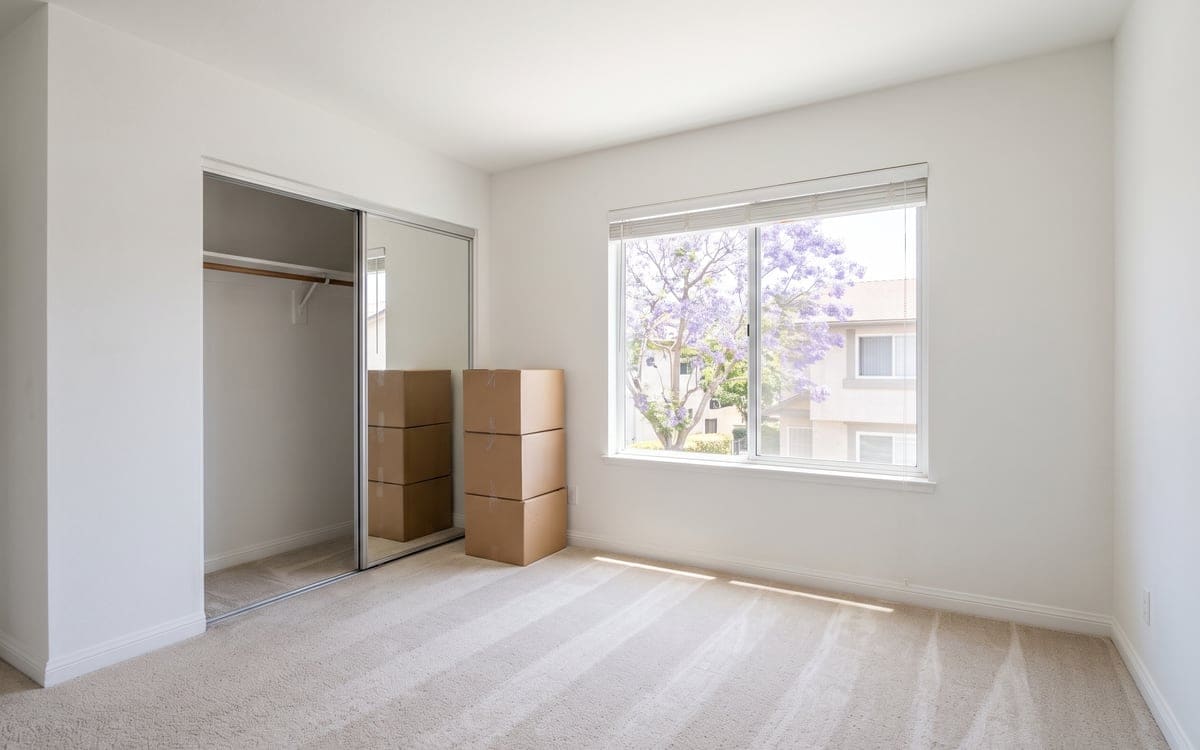
Open every closet. Old shelf liners come out, shelves within reach get a wipe, and the floor gets a vacuum pass. Anything beyond arm's reach from the floor is left alone.
Floors come last. Vacuum each room, including under where the bed was and under where the couch sat. On hardwood, a damp mop works only when the finish is in good shape; a wetter mop pulls at the finish. Tile and vinyl handle a damp mop with a mild cleaner. The route runs from the back of the apartment to the front door, so you do not cross freshly mopped floor on the way out.
Walk the empty rooms one last time with every light on. A soft damp cloth on a hidden spot tests whether a wall scuff is coming off. Scraping or sanding old paint is not cleaning.
What Civil Code 1950.5 says about cleaning at move-out
California's deposit law counts, among the permitted uses of a security deposit, the cleaning of the premises upon termination of the tenancy necessary to return the unit to the same level of cleanliness it was in at the inception of the tenancy. "Same level of cleanliness it was in at the inception of the tenancy" is the standard the code sets.
The same section sets a condition on charging a tenant for cleaning. The code says a landlord shall not require a tenant to pay for, or assert a claim against the deposit for, professional carpet cleaning or other professional cleaning services, unless reasonably necessary to return the premises to the condition it was in at the inception of tenancy, exclusive of ordinary wear and tear. What that language means for a given unit sits with the lease and the landlord. About 64 percent of Los Angeles households rent.
After the inspection comes the itemized statement
The same code also gives a tenant a step before the lease ends. If the tenant asks, the landlord carries out an initial inspection no earlier than two weeks before the end of the tenancy, after at least 48 hours' written notice, so the tenant can remedy any deficiencies identified and avoid deductions from the deposit. The inspection is optional for the tenant, and the written notice of the option is not optional for the landlord.
After that walk, the landlord issues an itemized statement that specifies the repairs or cleanings proposed as the basis for deductions from the deposit, and the tenant has the time between the inspection and the end of the tenancy to remedy identified deficiencies. That is the code's process.
About 11 percent of the city's residents aged 1 and over lived in a different home a year earlier.
The landlord's photos, and your own
California added a photo rule to move-out itself as of April 1, 2025.
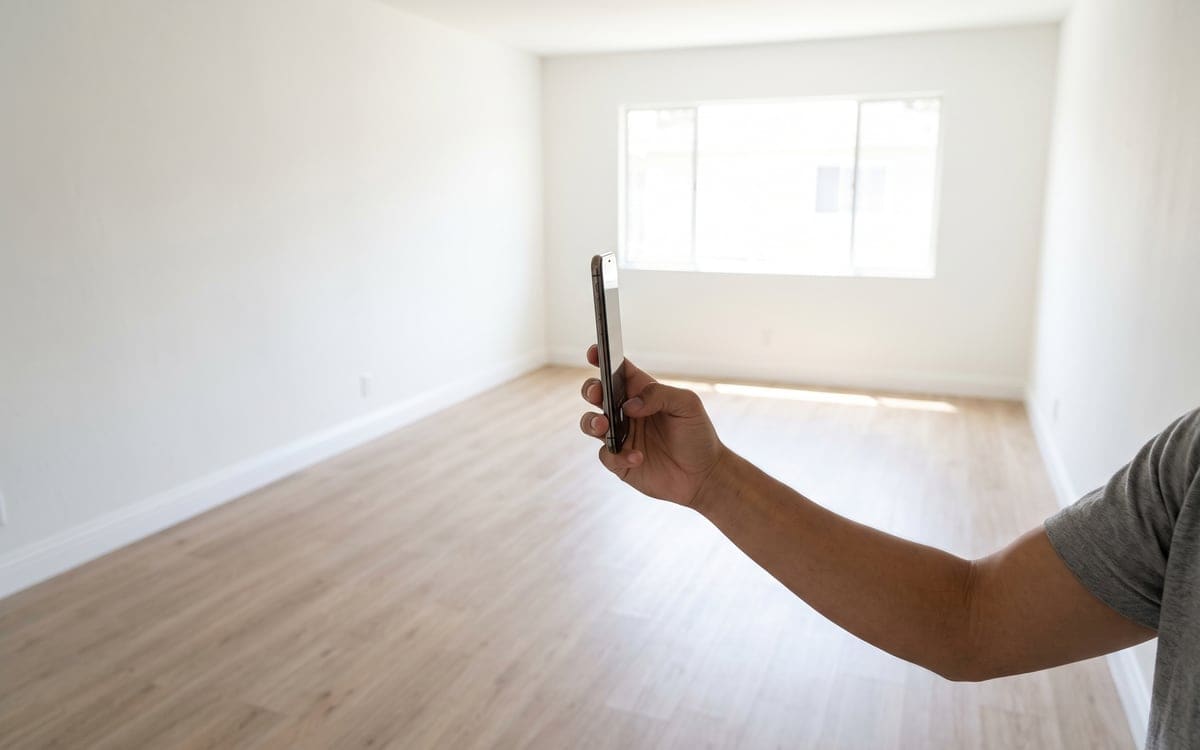
Keep your own set at the same time. Walk the empty rooms with your phone, open every closet and every cabinet, and shoot each one with the light on. Shoot the shower glass, the kitchen floor, the inside of the oven and the top of the stove. Those pictures are your record of the place as you handed it back. Specific deposit questions belong with the lease and the landlord.
Where the leftovers go in Los Angeles
There is still the leftover trash and the household hazardous waste under the sink.
Where the leftovers of a move-out go in Los Angeles
City code bars anything but stormwater from the storm drain system. LA Sanitation puts food scraps and food-soiled paper in the green bin and household chemicals at a S.A.F.E. Center.
Not the street, a gutter or a storm drain
- Buckets of soapy or rinse water stay out of the gutter
- City code bars anything but stormwater from the storm drain system
The green bin or kitchen pail
- Food scraps from the fridge
- Paper towels and other food-soiled paper
- Compostable-labeled bags and utensils go in the black bin
A S.A.F.E. Center
- Household hazardous waste, chemicals included
- Not the black bin
Sources: Los Angeles Municipal Code, Chapter VI, Article 4.4, Sec. 64.70.01 to 64.70.03 (codelibrary.amlegal.com); Board of Public Works, Rules and Regulations Governing Pollution Control of Discharges into the Storm Drain System (PDF via LA Sanitation and Environment); LA Sanitation & Environment, Weekly Curbside Green Bin Collection (Organics); LA Sanitation & Environment, Weekly Curbside Black Bin Collection (Trash).
Under the City code, no one may discharge anything but stormwater to the storm drain system unless a permit or exemption authorizes it, and streets and gutters are part of that system. The bucket does not get tipped into the gutter.
Food scraps and food-soiled paper go in the green bin. LA Sanitation lists coffee filters, napkins, paper towels, greasy napkins and pizza boxes on the green-bin side, and notes that items labeled compostable or biodegradable often do not break down quickly enough in commercial composting, so compostable utensils, bags and other biodegradable items go in the black bin rather than the green bin.
What is under the sink does not go in the black bin. Household hazardous waste, including batteries, paint, light bulbs, electronics and chemicals, must be taken to a S.A.F.E. Center, and oversized items like furniture, mattresses and tires can go on a free curbside bulky item pickup.
When a cleaner on the empty place makes sense
Not every move-out needs a cleaner. A tenant with time runs the checklist below by hand. A cleaner on the empty unit makes sense when the kitchen or bathroom was heavy going in, or when an itemized statement calls for work further out than a weekly tidy.
A move-out cleaning service works through an empty home from the top down. A move-in checklist covers what to tackle before furniture lands, if the next set of keys has already arrived. For what shifts the number on a move-out, what moves the price walks through the drivers.
The checklist, one page
Keep this near the kitchen counter on the last day.
| Area | What to clean | What gets missed |
|---|---|---|
| Kitchen | Fridge inside and out, oven inside and out, stovetop parts, hood, cabinets fronts and reachable shelves, drawers, counters, sink | Toe kick under the fridge, drawer backs, the ring under where the toaster sat |
| Bathrooms | Tub or shower, grout lines, tile, toilet in and out, vanity, mirror, baseboards tucked away | The space behind the toilet, medicine cabinet interior, shower-door track |
| Bedrooms | Baseboards, reachable frames of windows and doors, vents, closet floor, reachable shelves | The patch where the bed sat, the back of the door, the inside face of the closet door |
| Living areas | Switch plates, baseboards, sills, wall scuffs | Cords and the floor by the TV, imprint where furniture stood, interior of the front door |
| Floors | Vacuum carpets, damp-mop hard floors, finish at the front door | Transitions between rooms, toe kick under the stove, carpet inside closets |
| Entry | Mop the entry twice, wipe the inside of the door | Door frame, threshold, the kick plate under the handle |
What stays with the landlord or another trade
Holes and paint sit with the landlord or a painter. Carpet shampooing, duct work and anything that spreads on drywall after a leak are other trades. A deep clean while you still live there takes the backlog down ahead of the move, and apartments and condos covers how building access gets handled on the day.