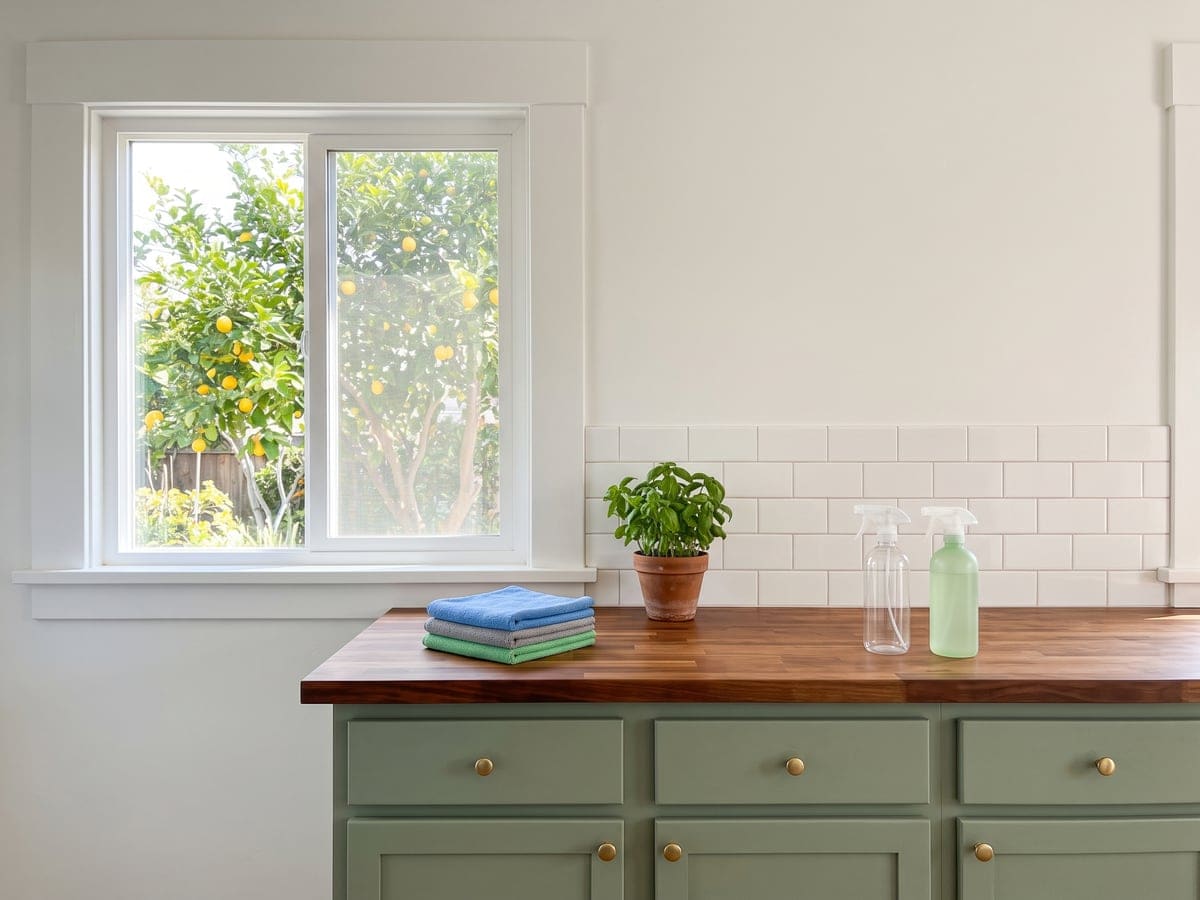
What a green cleaning means here
When people ask for green cleaning, what they usually have in mind is a practice around products.
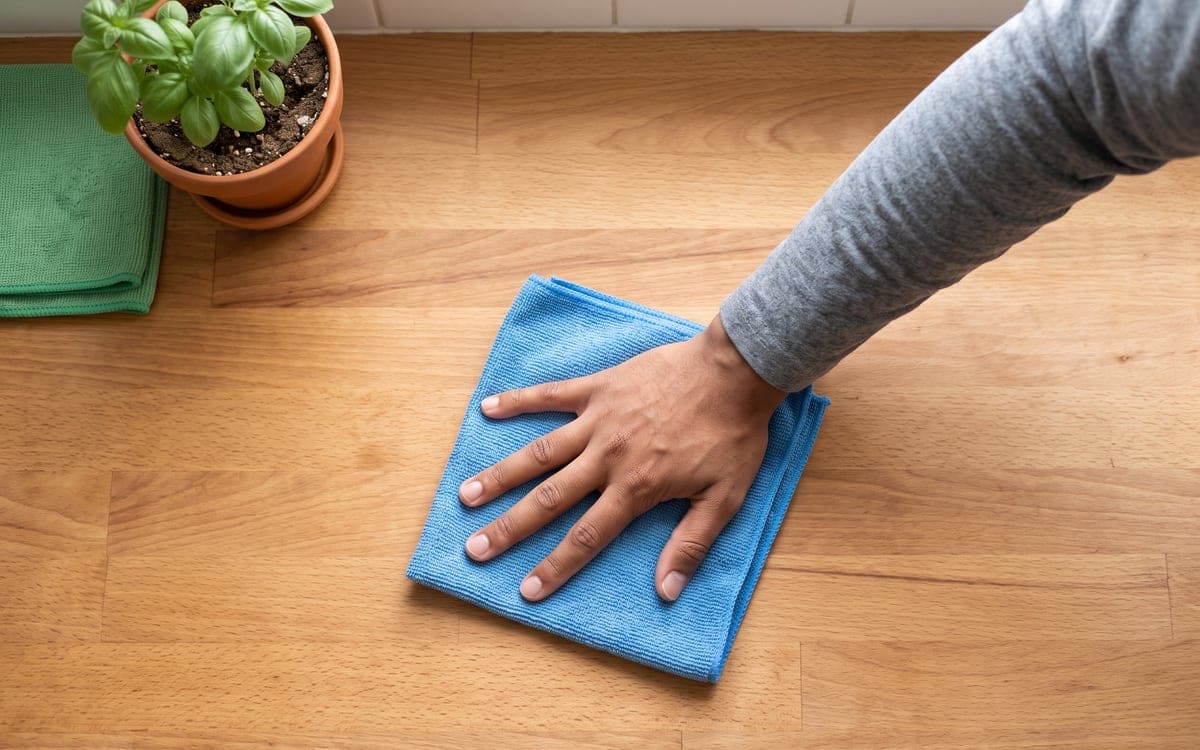
1. Fewer products, microfiber and water first
The visits here use what the room needs: a surface wipe with microfiber and water on a lot of the home, with stronger products on the rooms the call names (hard water film on glass, baked-on cooking spray on an oven face, soap scum where the shower door meets the frame). The method is dry microfiber first, then damp microfiber on surfaces. Some rooms call for a stronger product on the call: a stovetop after a long cooking stretch, a shower after a hot month.
2. Fresh air: windows opened when the weather allows
When the visit is working through a room with a stronger product (an oven face, a bathroom with hard water film), we open a window where the home allows it. Where the window stays closed, we work the room without one.
3. Your own products, used on request, told on the call
If you have products you want us to use (a wood-floor cleaner, a glass cleaner, a counter spray for stone, a scent you prefer), set them out and tell us on the call. We work from the bottles you have pointed to. If a product the room needs is not in the home, we tell you on the call and we agree what the room gets.
4. Rooms that need a stronger product are told to you before the cleaning
Some rooms do not come clean with microfiber and water alone, like a shower after months of hard water, an oven face, or a sink that has gone through dish after dish. For those rooms we name the stronger product on the call, we tell you what it is, and we agree a yes or a no before the cleaning.
| Part of the visit | What a lighter approach looks like | What to tell us on the call |
|---|---|---|
| Dusting | Microfiber dry, then damp on surfaces | Any surface that cannot take water |
| Kitchen counters | Damp microfiber, with a product on grease spots | Stone counter? Any scent off-limits? |
| Stovetop | A stronger product only where it is baked on, told to you first | How often the stove is used |
| Shower glass | Wipe-down, product only on the film | Which cleaner you want on glass |
| Floors | Damp mop with water, product on sticky spots | Hardwood? Which product you want? |
| Trash | Taken out, bag replaced | Where the bins are and which day the bin goes out |
When a lighter approach fits, and when it does not
When it fits
The home is already in reasonable shape and you want fewer products or your own. You want to try a cleaner using your own bottles. The place is small and the fewer-products practice is the one you want.
When another service is the better scope
The home needs a top-to-bottom pass before a schedule starts: that is a deep clean, where the depth comes from the rooms the pass covers. A regular rhythm after that is a regular maid service or a regular schedule. A green cleaning is the same scope as either one, with the product practice above layered on, settled on the call.
What the visit covers
A green cleaning works the rooms you list in the regular order: dusting, kitchen, bathrooms, bedrooms and living rooms, floors last. Products get agreed on the call: ours or yours, with the fewer-products practice set as the default. Which products never to mix is the guide; what moves the price carries the drivers for a cleaning like this one.
From the call, with your products or ours
- You phone us about the place: rooms and baths, how we come through the door, pets, which products on the counter to use and which to pass over.
- The scope gets settled together, with the rooms that need a stronger product named.
- A price comes back and you say go.
- The cleaning runs through the rooms, and you walk them at the end if you are around.
A green cleaning in Los Angeles
Household hazardous waste, chemicals included, must be taken to a S.A.F.E. Center and does not go in the black bin. That rule is the resident's; we do not take cleaners out of the home for you. If a bottle under the sink is old, or you are clearing products you no longer want in the house, the City's S.A.F.E. Centers are where they go.
Items labeled compostable or biodegradable often do not break down quickly enough in commercial composting, so compostable utensils, bags and other biodegradable items go in the black bin, not the green bin. On the green bin itself, coffee filters, napkins, paper towels, greasy napkins and pizza boxes count as food-soiled paper that goes in the green bin.