How a recurring clean keeps a home in hand
A schedule works the same rooms each visit, with the extras rotated between visits so nothing goes untouched for long.
1. The first visit, often a deeper one, sets the baseline
Where the place has not had a top-to-bottom pass in a while, the first visit works like a deep clean so the regular visits after it have a baseline to work from. Baseboards and door frames, cabinet fronts, oven glass, shower glass and the grout along the floor get the first-visit pass; later visits work the regular rooms.
2. A routine for each visit: kitchen, bathrooms, dusting, floors
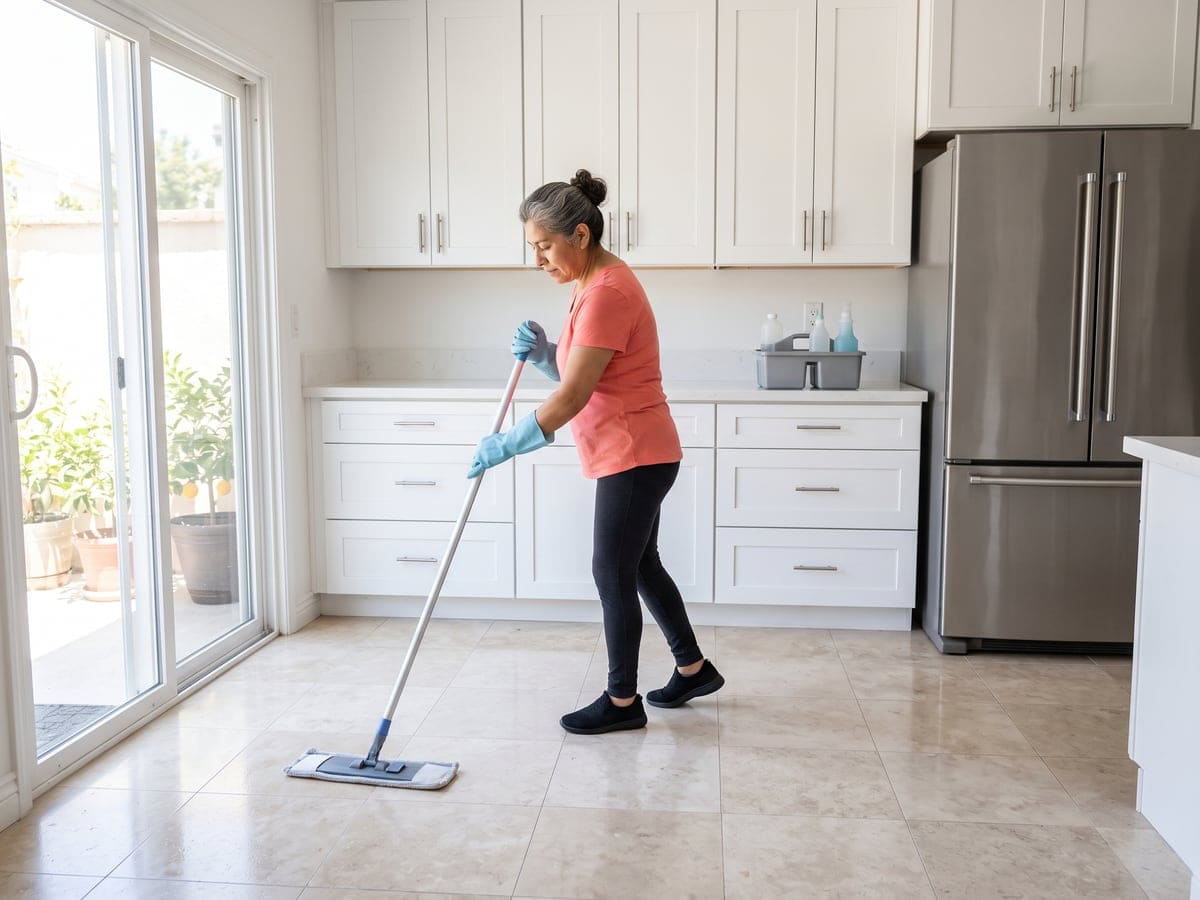
The pass is the same each time, so you know what the home looks like at the end. It dusts from high to low, then works the kitchen counters, the sink, the stovetop and the fronts of each appliance. In each bathroom, the shower or tub, the toilet, the vanity and the mirror get covered. Hard surfaces across the bedrooms and living rooms come next, with the floors last.
3. Rotating extras, agreed on the call
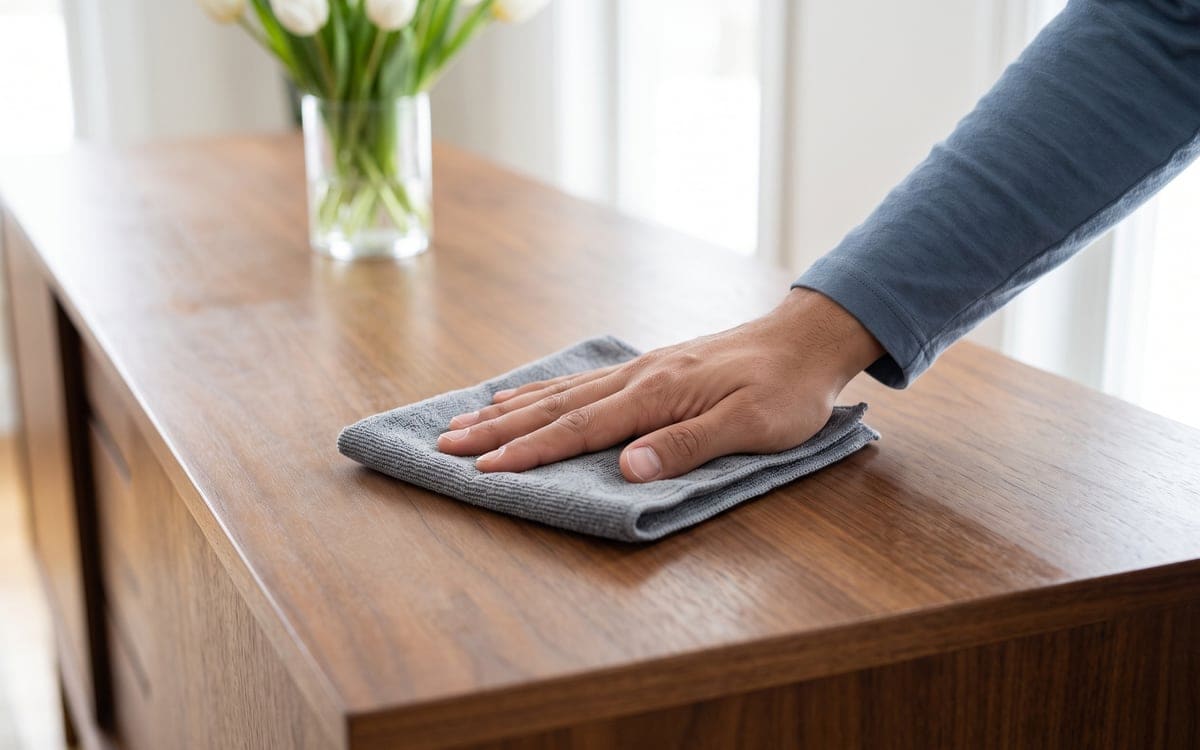
On top of the regular pass, a schedule can rotate the extras: baseboards one week, the inside of the microwave another, the fridge top on a third. We talk through the rotation on the call, and the rotation changes with the home. A new pet in the house moves pet hair up the list; a bigger kitchen moves cabinet fronts in sooner.
4. What changes with pets, roommates or a home office
Three people in a two-bedroom with a dog and a shared bathroom is a different rhythm from one person in a studio. The visits do not change in shape; they change in frequency and in which rooms get extra attention. A home office with a stand-up desk collects a different dust than the same room with a bed in it. We settle each of these on the call and when the home shifts.
5. When to adjust the rhythm
Tell us when something at home changes. A new baby, a dog, a roommate moving in, a renovation that just finished, a kitchen that is cooking harder than it was: all of them move the rhythm. A quieter stretch (travel, a kid off to college) can slow it down. We talk the change through and the next visit matches what has changed at home.
| Rhythm | Fits a home where | What each visit focuses on |
|---|---|---|
| Weekly | A busy kitchen, kids, pets, a shared bath | Kitchen depth, bath film, floors each time |
| Every other week | Lighter cooking, one or two adults, a pet | Full visit, with rotating extras over the month |
When a recurring schedule fits, and when it does not
When a schedule fits
The place is already in reasonable shape and you want it held there, or weekend chores keep piling up and you would rather spend the time somewhere else.
When another service fits better
If the place has not been cleaned in a long while, start with a deep clean first, then set the rhythm from there. For a single cleaning with nothing scheduled after it, a one-time cleaning is the page. A once-off before people come over or before a landlord walks through can run as a single visit too. For what a regular visit covers from top to bottom, what a maid service visit covers is the room-by-room page.
What a visit covers
Each visit works the rooms you have scoped on the first call, in the order the cleaning runs: dusting, kitchen, bathrooms, bedrooms and living rooms, floors last. Products get agreed on the call: ours or yours. The way we get in (a key, a lockbox, a gate code, a buzzer, a front desk) is something the first call sets, and the schedule after it works to that arrangement.
Deep or regular walks through the first-visit choice, how often to schedule walks through the rhythm, and how a recurring visit is priced carries the drivers.
From the first call to a rhythm you can keep
- You phone us about the place: room and bath count, how we come through the door, pets, and how often you would like a visit.
- The first visit (a deep pass or a regular one), the rhythm after it, and the rotating extras all get set together.
- A price comes back and the decision is yours.
- The first cleaning runs, a last walk through the rooms is possible at the end if you are around, and the schedule picks up from there.
A weekly rhythm in a Los Angeles home
Households in the city average 2.61 people, and renter households average 2.44. About 32 percent of households are one person living alone, and about 26 percent include someone under 18. A smaller household can suit a lighter rhythm; a busy kitchen (shared, cooking most nights) can suit a closer one.
Who lives in a Los Angeles home
Household figures for the City of Los Angeles from the Census Bureau's American Community Survey.
2.61
People in an average household
Source: U.S. Census Bureau, ACS 2020-2024 5-year, table B25010, Los Angeles city (via Census API)
32%
Households of one person living alone
Source: U.S. Census Bureau, ACS 2020-2024 5-year, table B11001, Los Angeles city (via Census API)
26%
Households with someone under 18
Source: U.S. Census Bureau, ACS 2020-2024 5-year, table B11005, Los Angeles city (via Census API)
The shape of a weekly visit depends more on the kitchen and the bath than on the number of rooms.