A deep clean goes past what a regular visit wipes
A regular maid visit works through what the week put down: crumbs, dust, soap film, the ring under a bottle, the paw prints along a hall. A deep clean reaches further, into places a weekly visit does not: the oven glass, the shower glass with hard water on it, the cabinet tops, and the baseboards walked end to end. A regular schedule afterward keeps the next weeks from backsliding.
The order of a deep clean
Top to bottom and dry to wet, so nothing that falls lands on a surface that is already done.
Dust high first
The tops of cabinets and the fridge, dusted from the floor.
The kitchen in depth
Cabinet fronts, the stovetop pieces, the hood and the inside of the microwave.
Bathrooms in depth
Glass, grout lines, fixtures and the base of the toilet.
Baseboards, then floors
Door frames, switch plates and sills, with the floors last.
The kitchen in depth
The kitchen has the most to reset. The stovetop comes apart the way the manual shows: drip pans, grates and burner caps each get soaked and scrubbed and go back together. The hood above the stove collects a film that lifts in short strokes with a damp wipe. The handle of the fridge and the microwave door are small spots that take fingerprints every day; a deep clean wipes each one.
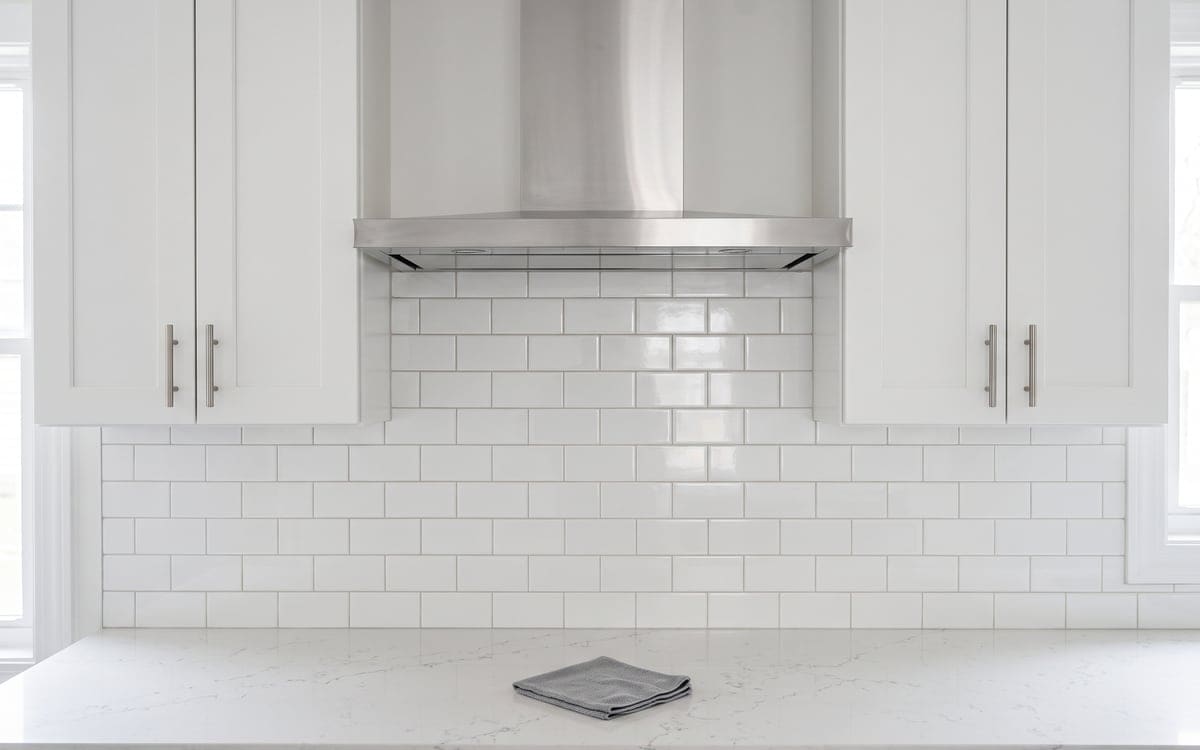
Pull the stovetop pieces into the sink and work on the inside of the microwave while the pieces soak. The oven interior is added when a household asks.
Open the cabinet doors and the drawers. The inside of each cabinet, within reach from the floor, is wiped. Shelves get wiped, drawer bottoms get wiped, cabinet fronts get wiped. The pulls carry fingerprints you did not notice until the fronts come back bright.
Pull everything out of the fridge if the household has asked for inside the fridge; otherwise, leave the interior to the household and wipe the outside and the top of the door. The top of a refrigerator and the top of cabinets collect a layer of greasy dust. Dust those down from the floor, then wipe each one with a damp cloth.
Bathrooms in depth, and the hard water film in Los Angeles
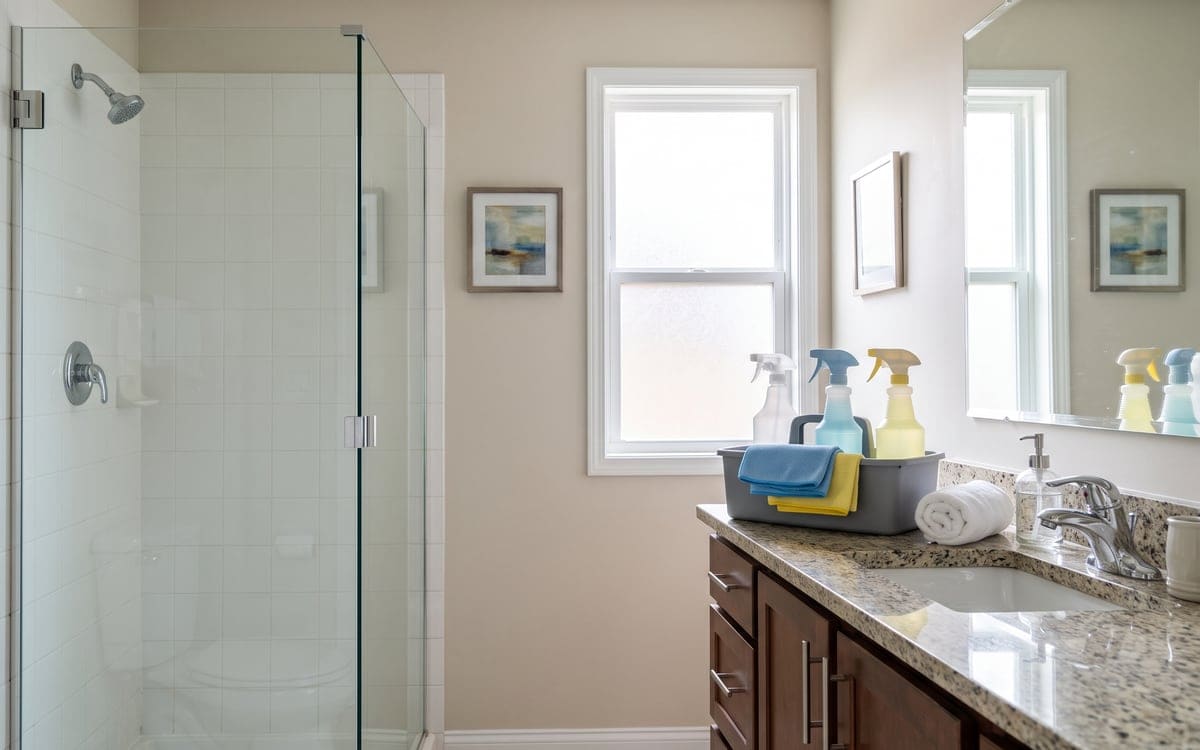
A deep clean of a bathroom reaches the grout, the base of the toilet, the tub surround, the shower door track and the inside of the medicine cabinet. The usual order holds: start the tub or shower first because it needs the longest to dry, then the toilet, the vanity and the mirror, the baseboards, and the floor last.
The hard water film is the heavy work. Spots and film on glassware are unsightly but not dangerous, and hard water also causes mineral buildup in plumbing, fixtures and water heaters and makes soaps and detergents work less well. In Los Angeles the water carries hardness from more than one source. LADWP's 2025 tests put total hardness at an average of 103 mg/L in Los Angeles Aqueduct water, about 115 mg/L in its well water, and 234 to 236 mg/L in water from the Metropolitan Water District's Weymouth and Diemer plants, with 140 from its Jensen plant. A deep clean works through the film on a shower glass with one cleaner at a time.
Never mix cleaning products. One product at a time, in a bathroom with the door open and the fan on. Scrub the grout where it has darkened. Lift the toilet seat and wipe the hinges. The vanity, the mirror and the inside of the medicine cabinet come after. Small spots of mold on tile and grout get a surface clean; anything spreading on drywall or wood, or appearing after a leak, goes to a mold professional.
Dusting from the floor up
The order of a deep clean runs from the top down, but every surface above eye level is reached from the floor. Nobody climbs onto a ladder, a step stool, a counter edge or the rim of a tub. The top of the fridge, the tops of cabinets, the hood above the stove, the top of a door frame and the blades of a low ceiling fan all come down from above eye level without a cleaner leaving the floor.
The order matters because dust falls. A fan dusted after the floor was mopped drops that dust onto the clean floor. The dust goes down first, then every room follows the top-to-bottom sequence inside its own four walls.
Baseboards, door frames, switch plates and sills
A deep clean walks every baseboard. Short wipes, with a damp cloth and a bucket of clean water that gets changed when it is no longer clear. Door frames, window frames and the tops of door frames come next. Window sills hold a thin layer of grit.
Switch plates, outlet covers, the handles of doors, the edges around a light switch and the sides of a door frame near the handle each pick up fingerprints that a regular visit skips. A deep clean picks each one up with a damp cloth.
Floors and the edges a vacuum skips
A regular pass covers the open floor. A deep clean reaches the edges. Pull the kitchen rug up, vacuum under it, work along the baseboards from one end of the apartment to the other. Window tracks hold a thin layer of grit, and the corners of each track get cleaned. Sliding door tracks and the threshold at the entry each hold dirt a regular visit does not reach.
On hardwood, a damp mop is only for finishes in good shape; a wetter mop pulls at the finish. Tile and vinyl handle a damp mop with a mild cleaner. The route is from the back of the apartment forward, so you do not step across what has just dried.
What a deep clean leaves out
A deep clean is cleaning, so a handful of jobs sit outside it: scraping or sanding old paint, outside windows above the ground floor, pressure washing a patio, work on solar panels, and hauling furniture, debris or old chemicals away. LA Sanitation says household hazardous waste, including chemicals, must be taken to a S.A.F.E. Center and does not go in the black bin. Mold beyond small surface spots on tile and grout is for another trade.
Inside the oven and inside the fridge are often added when a household asks. So are blinds, inside cabinets emptied for a wipe, and the windows reached from inside the apartment. Each one adds to the work and to the price, and each one comes up on the call rather than at the door.
Who needs one first
A deep clean fits a few situations: a first visit after a long gap when the surfaces are heavy, a visit before guests arrive for a long weekend, a landlord's walk-through on an empty place, or a move-in where the previous cleaning did not match yours.
A deep cleaning service handles the whole list. A regular maid service and a schedule afterward keep the next weeks from backsliding, and an empty unit can get the same deep approach without the furniture in the way. If the question is deep or regular, the drivers in what moves the price show how a deep clean shows up on a quote.
A standard visit against a deep clean
| Area | In a standard visit | Added in a deep clean |
|---|---|---|
| Kitchen | Counters, sink, stovetop surface, outside of appliances | Stovetop apart, oven interior on request, cabinet tops and fronts, top of fridge, inside microwave |
| Bathrooms | Toilet, sink, tub or shower, mirror, floor | Grout scrubbed, hard water film on glass and faucets, inside medicine cabinet, baseboards |
| Rooms | Dust reachable surfaces, vacuum open floor, make the bed | Baseboards end to end, door and window frames, switch plates, blinds on request |
| Floors | Vacuum, damp-mop hard floors | Edges along baseboards, window tracks, under rugs, thresholds |
| High dusting | Reachable eye-level and below | Ceiling fans and cabinet tops reached from the floor |