
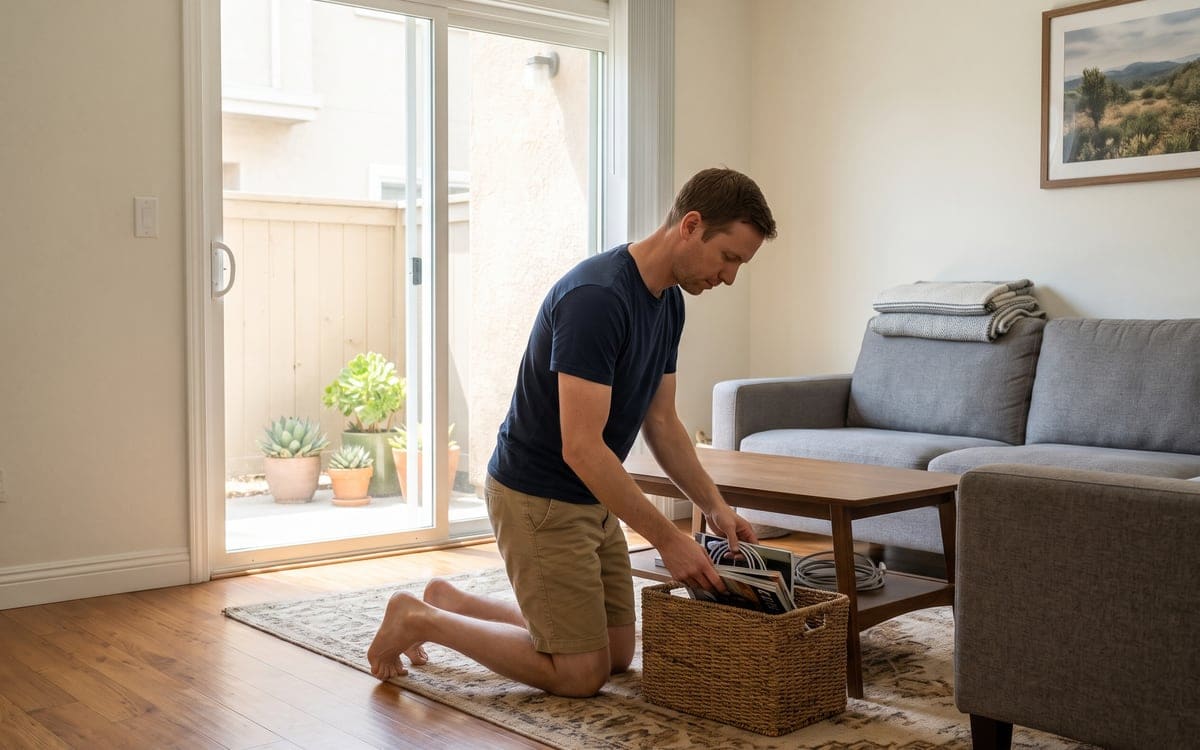
You do not clean first
Wiping counters before the cleaner arrives is not necessary. A maid service is there to clean; preparation means making the home accessible, not doing the cleaning first.
A surface cleared enough to wipe is what matters, not one already wiped. In the kitchen, removing the dish rack or the cutting board lets a counter get cleaned end to end. In the bathroom, moving shampoo and a razor off the tub rim lets the rim get scrubbed rather than worked around. Those small moves make the visit more thorough.
If the home has not been thoroughly cleaned in a while, a deep cleaning service on the first visit takes the backlog down before a regular schedule starts.
Clear the surfaces and the floor
A cleared surface is one with room to work on it. The kitchen countertop that holds the coffee maker, a fruit bowl, a stack of mail, and a knife block can still be wiped around; the mail moved off and the block shifted to one end lets the whole stretch be cleaned in one pass.
Floors are worth thinking about too. Bags on the kitchen floor, shoes at the hall entrance, a laundry pile on the bathroom floor: any of those make a vacuum or a mop work around obstacles instead of covering the whole floor.
| Space | What to clear | What to tell us |
|---|---|---|
| Kitchen | Countertop items that block a full sweep, anything in the sink | How often the stove runs, any surface you want skipped |
| Bathroom | Items on the tub rim or shower shelf, things on the vanity top | Whether the fan works or the window opens |
| Bedroom | Clothes or items on the floor; nightstand surface | Whether the bed gets made or remade |
| Living room | Bags, boxes or items on the floor; coffee table surface | Any furniture too heavy to move |
| Building access | (path through common areas is the building's job) | Floor, parking, gate code, elevator, any front desk |
Tell us about access: parking, the courtyard gate, stairs, a front desk
A street-level studio with parking out front is a different situation from a fourth-floor walk-up on exterior stairs, or a courtyard building with a locked gate, or a condo in a mid-rise with a front desk that wants a visitor name.
None of that changes the cleaning. It changes the setup. Tell us the floor, the parking, any gate or access code, whether there is an elevator, and any front desk procedure at the time of scheduling.
For a high-rise or a building with a freight entrance, note whether the building expects outside visitors to use a service elevator. Some buildings require it. Some front desks want cleaners to check in before going up.
Pets and where they will be
Deciding where pets will be is one of the more important things to sort before a visit. For a household where a pet's presence in the space between visits is part of what gets cleaned, the question of where the animal is during the visit matters for both the cleaner and the pet.
For a cleaner, knowing where the animals are reduces the chance of working around a pet that follows from room to room or jumps onto surfaces as they are finished.
A dog confined to one room while the rest of the apartment is cleaned works well. A cat that tends to stay under the bed is less of an issue than one that sits on every freshly done surface. If a pet is anxious with strangers in the home, mention it when you schedule.
Products you prefer or want avoided
Products are something to go over at the time of scheduling or on the first call. Some floors need a specific product. Some households keep certain things out of the home. Some want their own supplies used rather than the cleaner's.
Never mix cleaning products together,1 as mixing can create toxic vapors. If there are open containers or partially used products on a surface the cleaner might encounter, flag them at the time of scheduling.
What to put away and what to leave alone
Items worth putting away before a visit: papers that should not be moved, fragile pieces on open shelves that are not part of the regular cleaning, and anything the household does not want handled. A cleaner working through a room will dust and wipe what is accessible. Telling us in advance what to skip or leave in place keeps the visit predictable.
Things that are too heavy to move, a set of shelves that should not be touched, or a room that is off-limits on a given day are all better communicated before the visit than during it. A note when you schedule covers it: one sentence about a piece of furniture, a shelf, or a room.
A stone counter, a wood floor, or a specialty finish on a piece of furniture should be mentioned before the visit.
What to have ready before a Los Angeles cleaning
The short list for the call: rooms and full bathrooms counted separately. How the cleaner gets in (parking, floor, gate code, elevator, front desk if applicable). Pets and where they will be. Any product preference or a surface that needs a specific approach. Anything you want left alone.
With that picture on the call, the visit can be planned. How often to schedule covers how the household's habits shape whether a visit should come weekly, every other week, or monthly. What the price is built from goes through the inputs in order.