Where to dump mop water: a sink or a toilet inside
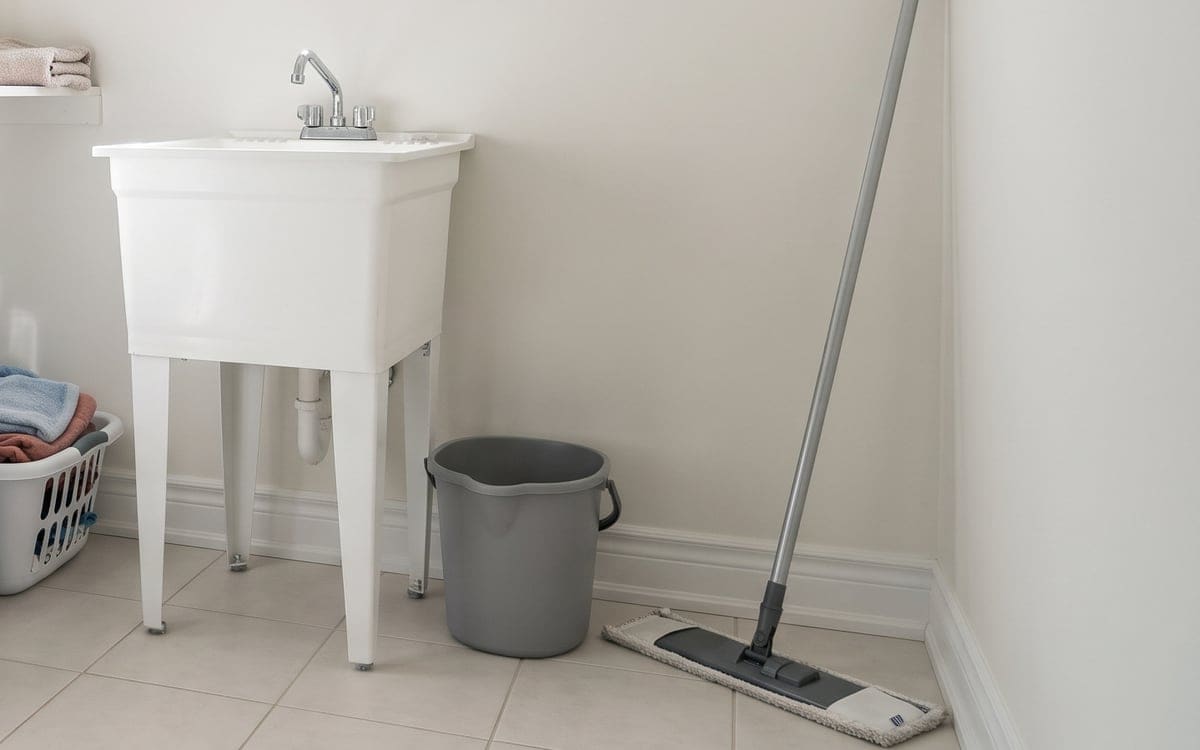
The place for a bucket of dirty mop water is a sink or a toilet inside the home. Both run through the sanitary sewer. A kitchen sink takes a steady pour; a utility sink in a laundry area has more capacity for a larger bucket. A toilet also works, flushed once the bowl has filled.
Nothing on the list of indoor pours is new to a cleaner, and nothing on the list involves a special drain. A plain household sink does the job. Outdoor pours look harmless at first.
The street and the gutter count as the storm drain
The storm drain system means any facilities or any part of those facilities, including streets, gutters, conduits, natural or artificial drains, channels and watercourses that are used for the purpose of collecting, storing, transporting or disposing of stormwater,1 the code says.
A bucket poured onto a street or into a gutter has already reached the storm drain system in the code's own terms. There is no step between the gutter and the inlet; the gutter is part of the system that leads to the inlet.
Only stormwater belongs in the storm drain system
City code bars discharging anything but stormwater to the storm drain system unless a permit or a listed exemption allows it.1 Rain that fell on a roof and ran down a drain is stormwater. A mop bucket's water is not stormwater.
The Board of Public Works' bucket rule (written for car washes)
The City also publishes a sheet on bucket water, and it was written for car washes rather than for house cleaning. In its car washing practices, the Board of Public Works says never to empty buckets of soapy or rinse water into a parking lot, street, gutter or storm drain, and always to empty buckets into the sanitary sewer.2
No City sheet speaks to mop water from a house cleaning. Los Angeles Municipal Code's rule on discharging to the storm drain system applies, and the sink or the toilet inside the unit is the fit for the bucket.
| Where the water goes | How it is handled |
|---|---|
| A sink or a toilet inside | Sanitary sewer |
| A storm drain inlet, a street or a gutter | The storm drain system, which only stormwater may enter unless a permit or exemption covers it |
Storm drains run to the ocean untreated
LA County Public Works says stormwater and urban runoff pick up sediment, airborne chemicals, pet waste, trash, oil and other auto fluids and carry them into the storm drains, which flow to the local rivers, creeks and the ocean untreated.3
LA County Public Works also maintains a countywide 888-CLEAN-LA hotline that takes reports of illicit discharges and dumping into storm drains.4
Who enforces it
The City's rule is enforced inside LA Sanitation and Environment. LA Sanitation and Environment's Watershed Assessment Team and Emergency Response unit inspects and enforces the City's stormwater ordinance, including illegal dumping and illicit discharges.5
What this means for a visit from a cleaner
We offer no outdoor hosing of patios, walkways, entries or balconies; that is pressure washing's trade and goes to a pressure washing crew.
A maid service visit, an apartment cleaning service visit and a move-out cleaning visit each clean the inside of a home. The move-out cleaning checklist covers the floor work in order, and hard water stains in Los Angeles covers how a bathroom fixture holds mineral.